
Our Science
Our science builds on the pioneering work of Nobel laureate Professor Sir Martin Evans in embryonic stem cell research. He was the first to successfully isolate and culture embryonic stem cells from mice, laying the foundational science for genetic engineering in mammals. This work led to the award of the 2007 Nobel Prize for Medicine along with gene editing pioneers Mario Capecchi and Oliver Smithies.
His work in stem cell biology and regenerative medicine paved the way for the innovation that underpinned the development of Cardiogeni’s portfolio of cellular therapies that target the regeneration of damaged heart tissue via a proprietary new cell type known as an immunomodulatory progenitor cell (iMP).
His work informs all aspects of Cardiogeni’s research including:
• Cell culture techniques used to isolate and expand novel cell types, such as the iMP cells.
• Genetic modification methods that inform how iMP cells are engineered for therapeutic uses.
• Regenerative medicine strategies that combine immune modulation with tissue repair.
Our Products
Cardiogeni is developing a breakthrough portfolio of cellular therapies designed to repair damaged heart tissue and restore cardiac function. Our lead candidate, CLXR-001, represents the next generation of regenerative medicine, targeted, potent, and built to transform outcomes for patients with heart failure.
CLXR-001
CLXR-001 addresses the mid-stage heart failure market where patients being treated by coronary artery bypass graft (CABG).
The market consists of approximately 850,000 patients treated annually.
Compelling efficacy and safety data in completed P2a clinical trial.
CLXR-002 & CLXR-003
CLXR-002 and CLXR-003 address the early-stage heart failure market with minimally invasive delivery.
This market consists of approximately 2-3 million patients treated annually.
Compelling pre-clinical animal safety and efficacy data (patch).
CLXR-004
CLXR-004 has been designed for use in combination with a left ventricular assist device (LVAD) device to treat severe heart failure.
The market consists of approximately 3,000 patients treated annually.
LVAD device partners are currently being saught to perform a P1 clinical trial for an orphan indication.
Our Intellectual Property
Cardiogeni’s proprietary technology platform is protected by trade secrets and patents which are all owned by the Company.
Cardiogeni has filed approximately 100 patents and trademarks, with over 30 granted patents in the US, EU and Asia.
Cardiogeni currently has established four patent families:
- Immune-modulatory progenitor (iMP) cells, CLXR-001.
• Progenitor cells of mesodermal origin (PML).
• Mesodermal killer cells (MK) cells.
• Manufacturing Reagents.
These patents safeguard the cell bank, the process and reagents used for modifying cells to produce specific target molecules, and the target molecules themselves. All the cells that are being progressed into clinical testing are protected by Composition of Matter patents
Our Medicine
CLXR-001: Lead Candidate
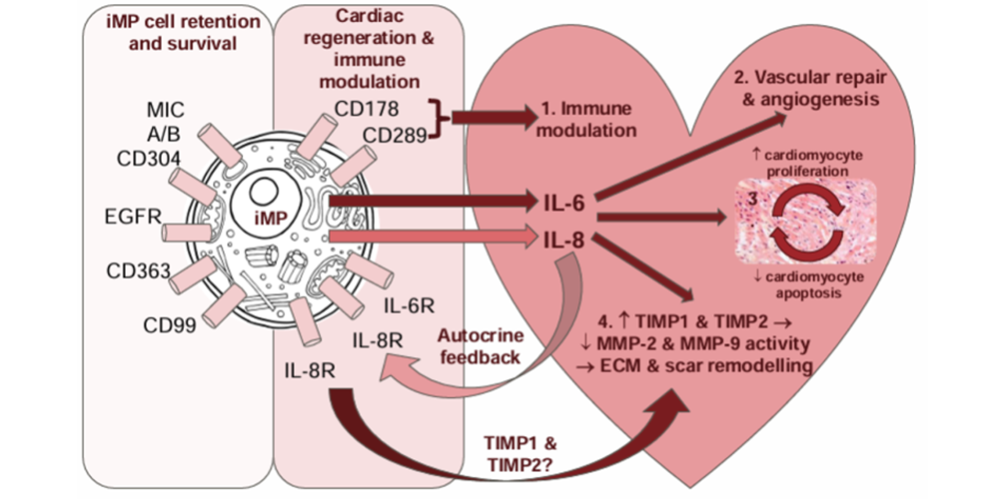
CLXR-001 is based on a specific immunomodulatory progenitor or iMP cell that is designed to survive and persist in the cardiac environment following administration during coronary artery bypass graft (CABG) surgery. The therapeutic effect is mediated through a combination of immune modulation, vascular repair, and extracellular matrix remodelling. CLXR-001 expresses a distinctive set of receptors and secretory molecules, including CD304, EGFR, CD363, and IL-8R, which contribute to its regenerative capabilities. They promote cardiomyocyte proliferation, reduce apoptosis, and modulate the activity of matrix metalloproteinases (MMPs) by increasing the expression of tissue inhibitors, such as TIMP1 and TIMP2. This leads to a reduction in the hibernating myocardium present in scar tissue and remodelling of the extracellular matrix, which is critical for restoring heart function.
CLXR-001: Phase 2a Trial
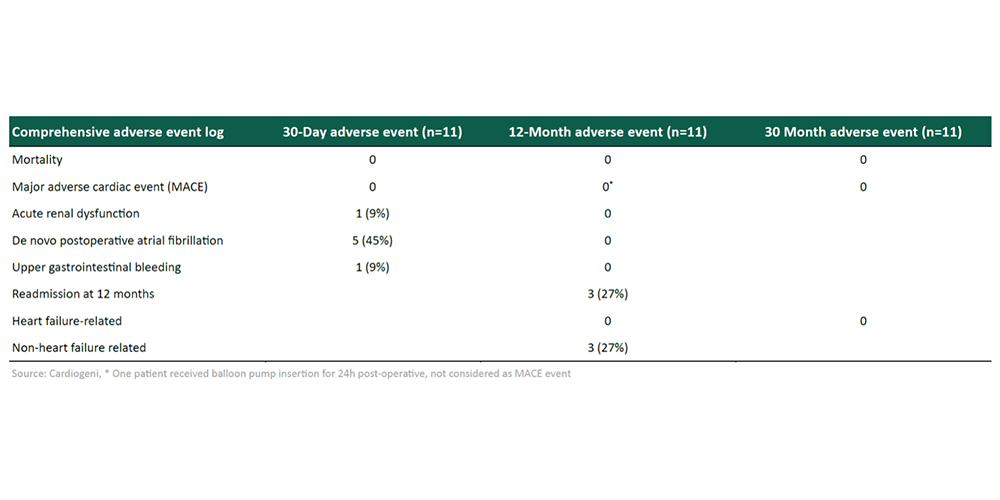
Cardiogeni’s Phase IIa clinical trial (ID: NCT01753440), conducted at AHEPA University Hospital in Thessaloniki, Greece, was designed to assess the safety and efficacy of the company’s lead candidate, CLXR-001, in patients with heart failure undergoing coronary artery bypass grafting (CABG). Initiated in November 2012 and completed in December 2014, the study enrolled eleven patients diagnosed with ischemic cardiomyopathy (LVEF < 40%), a serious condition characterised by weakened cardiac muscle resulting from inadequate blood supply due to coronary artery disease or prior myocardial infarction. Participants were monitored for up to five years, with primary endpoints including assessments of cardiac function, scar volume reduction, and quality of life. Safety was also a key focus. The trial reported no mortality and no major adverse cardiac events (MACE) at 30 months. There were some transient post-operative complications, such as atrial fibrillation and gastrointestinal bleeding, but none were considered treatment-related or clinically significant in the long term.
CLXR-001: Increases Heart Function
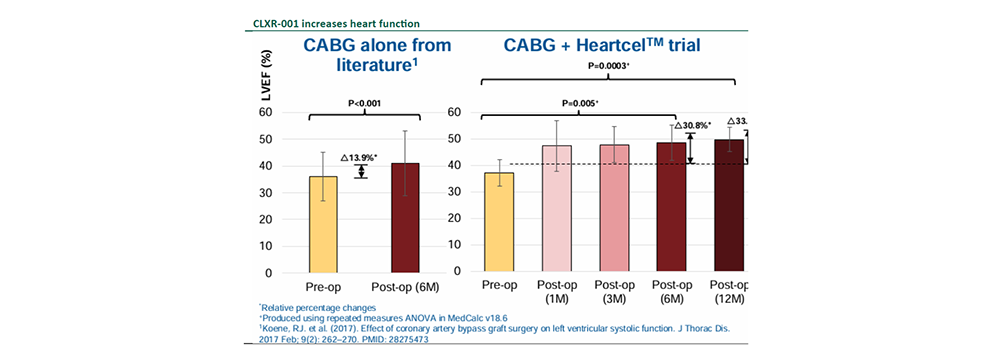
The technology has shown significant clinical promise. Left Ventricular Ejection Fraction (LVEF) is a key measure of how well your heart is functioning, specifically, how effectively the left ventricle pumps blood out to the rest of the body. It is a key measure of heart function.
• LVEF 55-70%: Normal heart function
• LVEF 41-54%: Mildly reduced heart function
• LVEF 30-40%: Moderately reduced heart function
• Below 30%: Severely reduced heart function
In the Phase 2a trials, patients treated with CLXR-001 during CABG demonstrated a 30.8% improvement in LVEF, a key measure of heart function, at six months post-surgery. This is in comparison to a 13.9% improvement with CABG alone. The long-term benefits are also notable, with LVEF improvement reaching 33.8% at 12 months post-surgery for those treated with CLXR-001.
CLXR-001: Repairs Damaged Tissue
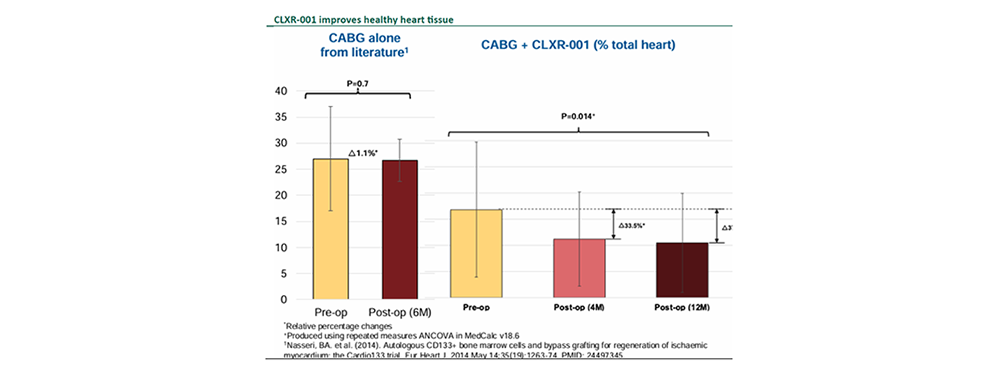
The Phase 2a trial also provided a crucial feature of CLXR-001 in improving the proportion of healthy cardiac tissue volume vs. scar tissue volume. The heart is a muscular pump made of specialised cells called cardiomyocytes. When these cells are damaged, typically due to a heart attack or side effect in cardiac surgery, they can go into hiberation or die and are replaced by scar tissue, which is made of collagen and fibroblasts. Unlike cardiomyocytes, scar tissue is non-contractile and stiff, meaning it doesn’t contribute to pumping and can actually impair it.
With CLXR-001, scar volume was reduced by 33.5% at four months post-surgery and continued to improve at 37.8% at 12 months post-surgery, far exceeding the 1.1% reduction seen with surgery alone at six months.
CLXR-001: Improved Life Quality
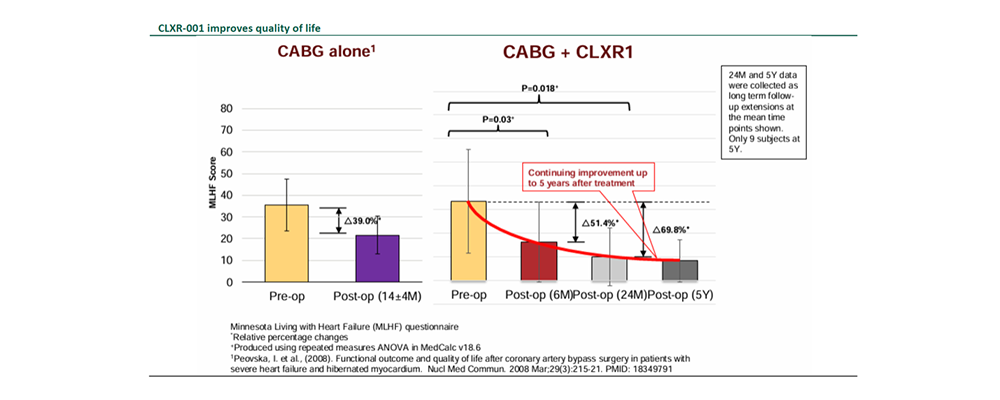
Following heart surgery, the Minnesota Living with Heart Failure (MLHF) Questionnaire is a widely used, validated tool designed to measure how heart failure affects a patient’s quality of life. It’s a patient-reported outcome measure that captures the physical, emotional, and social limitations caused by heart failure.
Following administration of CLXR-001, quality of life improvements was also substantial, with a 69.8% increase in MLHF scores at 24 months post-treatment, compared with 39% without Cardiogeni’s treatment. Measures also show that improvement is still remaining five years post-surgery. These outcomes suggest that Cardiogeni’s approach not only alleviates symptoms but actively regenerates heart tissue, offering a potential paradigm shift in the treatment of heart failure.
CLXR-001: Patient Case Study
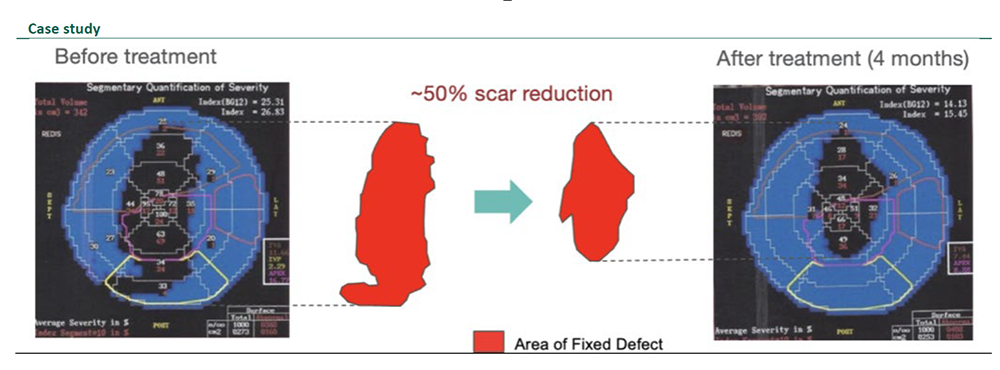
Below is a case study of a 54-year-old patient with a history of heart attacks and a 40% reduction in Left Ventricular Ejection Fraction. The patient’s heart has a 50% scarring of the left ventricle before treatment (black area on the left picture). Heart scarring (combination of necrotic and hibernating myocardium) is the key pathology associated with mortality or morbidity in heart failure, and CABG surgery and other current medical treatments do not reduce heart scarring. Four months after treatment with CLXR-001, the heart scarring is reduced by ca.50% for this patient.
In this instance, the patient experienced a dramatic reduction in scar tissue, which is particularly noteworthy given that conventional therapies, such as CABG surgery, typically do not address or reverse cardiac scarring. This level of improvement not only highlights the effectiveness of CLXR-001 but also demonstrates its potential to change the prognosis for individuals with significant myocardial damage. The reduction in scarring is directly linked to better cardiac function (hypothesised to be due to reactived hibernating myocardium) and a lower risk of adverse outcomes, reinforcing the value of regenerative therapies in heart failure management.